
What is Somatic Bodywork?
A Plain-Language Guide to How It Works, Who It's For, and What to Expect
If you've been hearing "somatic bodywork" and nodding along like you know what it means, but privately wondering whether it's a massage, a therapy, a spiritual practice, or some combination of all three, don't worry- you're in good company.
The term is everywhere right now, and the explanations are all over the map.
Here's what it actually is.
What Somatic Bodywork Is
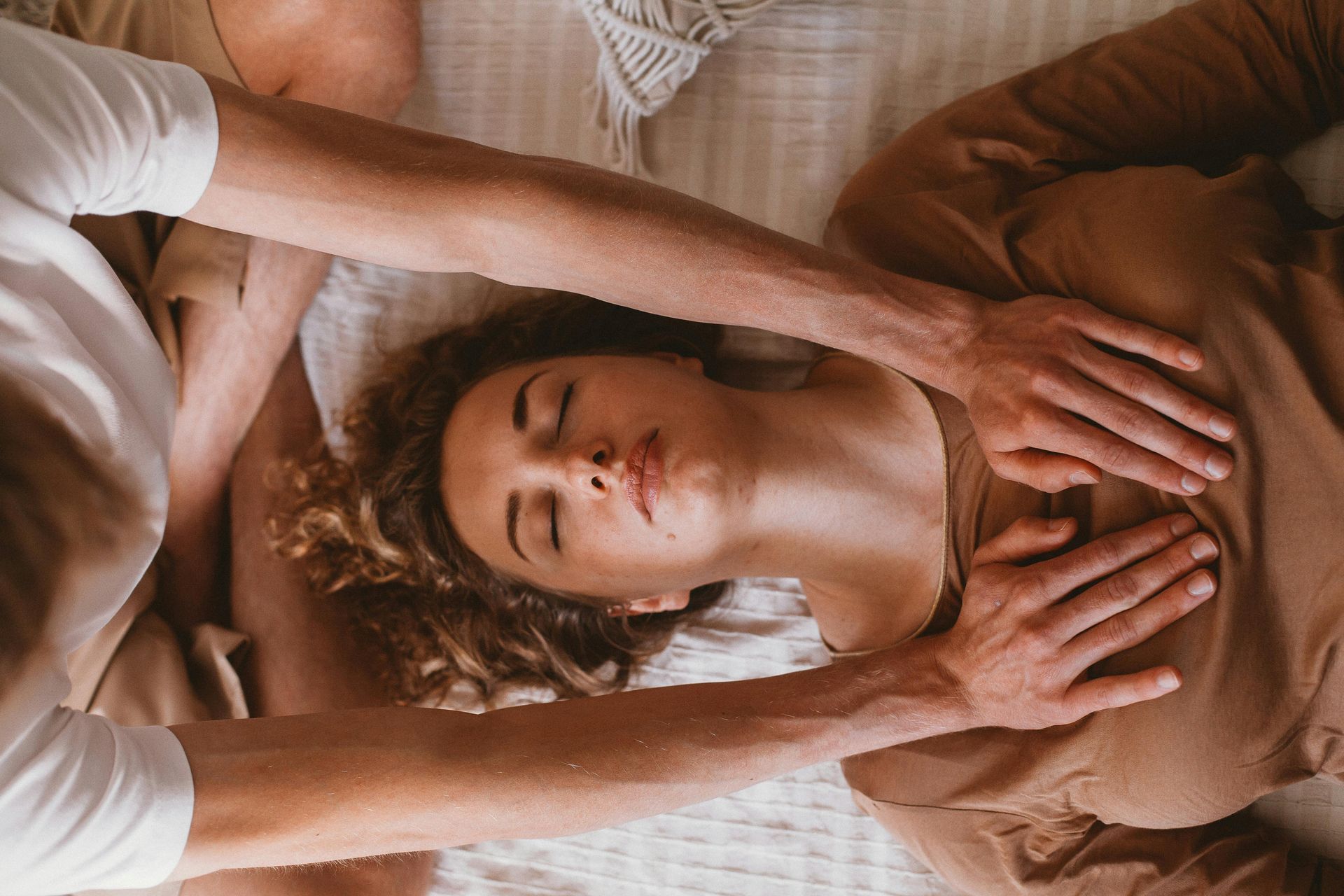
Somatic bodywork is a fully clothed, body-centered practice that uses hands-on or energetic touch to help the nervous system regulate, release stored tension, and shift patterns that talking or mindset work alone often can't reach.
"Somatic" comes from the Greek word soma, meaning 'body,' but not in the way it's commonly used. Soma goes beyond the corporeal body to include the wholeness of a being, including its physical, mental, emotional and spiritual aspects. At its core, somatic work operates on the understanding that experiences, stress, and unresolved responses don't only live in memory and thought. They live in the body in the way you brace your shoulders, in the breath you hold without noticing, in the way your system reads safety, or alerts to danger.
Through attuned touch, guided awareness, breath, movement, and sound, a skilled practitioner creates the conditions for the body to soften, release, and reorganize at the level of the nervous system.
At WildRise, all somatic bodywork is rooted in the
Strozzi Institute lineage, one of the original and most rigorous somatic training lineages in the country, created by a clinical therapist and is fully trauma-informed.
How Somatic Bodywork Differs from Massage
This is the most common questions we hear at WildRise. Massage and somatic bodywork share some surface similarities, but they are doing fundamentally different things.
What massage does
Massage therapy works primarily with muscle tissue, soft tissue, and circulation.
Depending on the type, it targets different layers and outcomes:
- Swedish massage uses long, flowing strokes to promote relaxation and improve circulation.
- Deep tissue massage applies sustained pressure to reach deeper muscle layers, targeting chronic tension and knots.
- Sports massage focuses on injury prevention and recovery, often targeting specific muscle groups.
- Trigger point therapy works on localized areas of muscle tension that refer pain to other parts of the body.
All of these are legitimate and valuable. They can reduce physical pain, ease muscle tension, improve recovery, and support overall wellbeing.
Where somatic bodywork goes differently
The practitioner is not primarily working on the muscle. They are working with the nervous system — tracking how the body responds moment to moment, and using attuned presence and touch (or energetic touch) to support the body’s own process of reorganizing and releasing what it has been holding.
What they Share and Where they Part Ways
Both involve a practitioner and a client working with the body. Both can reduce tension and support overall wellbeing. Both create conditions for the body to feel safer and more at ease.
- Massage sessions typically involve undressing to your comfort level, whether that's partial clothing, underwear, or full nudity with draping. Somatic bodywork at WildRise is fully clothed throughout the entire session, no exceptions.
- Massage generally follows a practitioner-led sequence. Somatic bodywork is collaborative, meaning your practitioner will give you opportunities to work together following what the body is presenting in real time.
- Touch is one tool in somatic bodywork, not the only one. Sessions also incorporate breathwork, sound and vocalization, and movement.
- The practitioner’s own regulated nervous system is part of the work. Your nervous system responds to theirs, which is why the quality of presence matters as much as technique.
- Somatic bodywork can produce somatic releases — spontaneous laughter, tears, trembling, sighing, or sounds that arise as the nervous system reorganizes. These are normal, healthy, and welcome.
How do Somatic Bodywork and Somatic Integration Coaching Relate?
People sometimes ask whether somatic bodywork and somatic integration coaching are the same thing. They’re related, but distinct.
Somatic integration coaching is conversational and practice-based. It builds your capacity to recognize your nervous system patterns as they arise, work with your stress responses in real time, and bring embodied awareness into your relationships, your work, and your daily life. In the Strozzi lineage, bodywork can be woven into a coaching session when it’s what the moment calls for, making it one tool among the full range of practices, not the organizing focus.
A dedicated somatic bodywork session keeps the hands-on work primary from start to finish. Many clients work with both. Bodywork creates openings. Coaching builds the capacity to step into them and stay there.
What Actually Happens in a Session
Sessions at WildRise are fully clothed throughout. Here’s how a typical somatic bodywork session unfolds:
Before the work begins
You and your practitioner start with a brief conversation — what’s present for you today, what you’re noticing in your body, and what your intention is for this session. This is not a clinical intake. It’s an orientation, a chance to arrive.
During the session
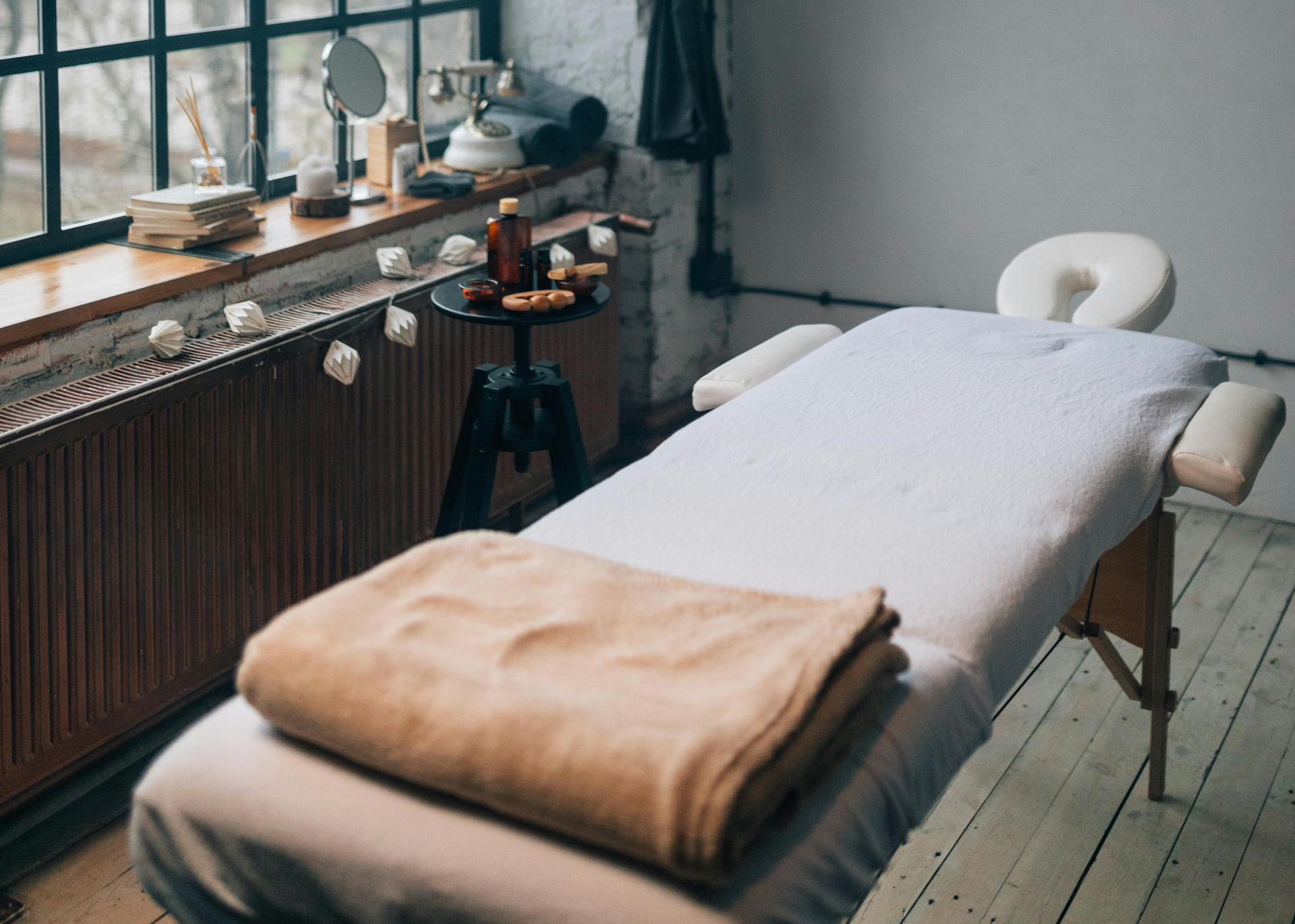
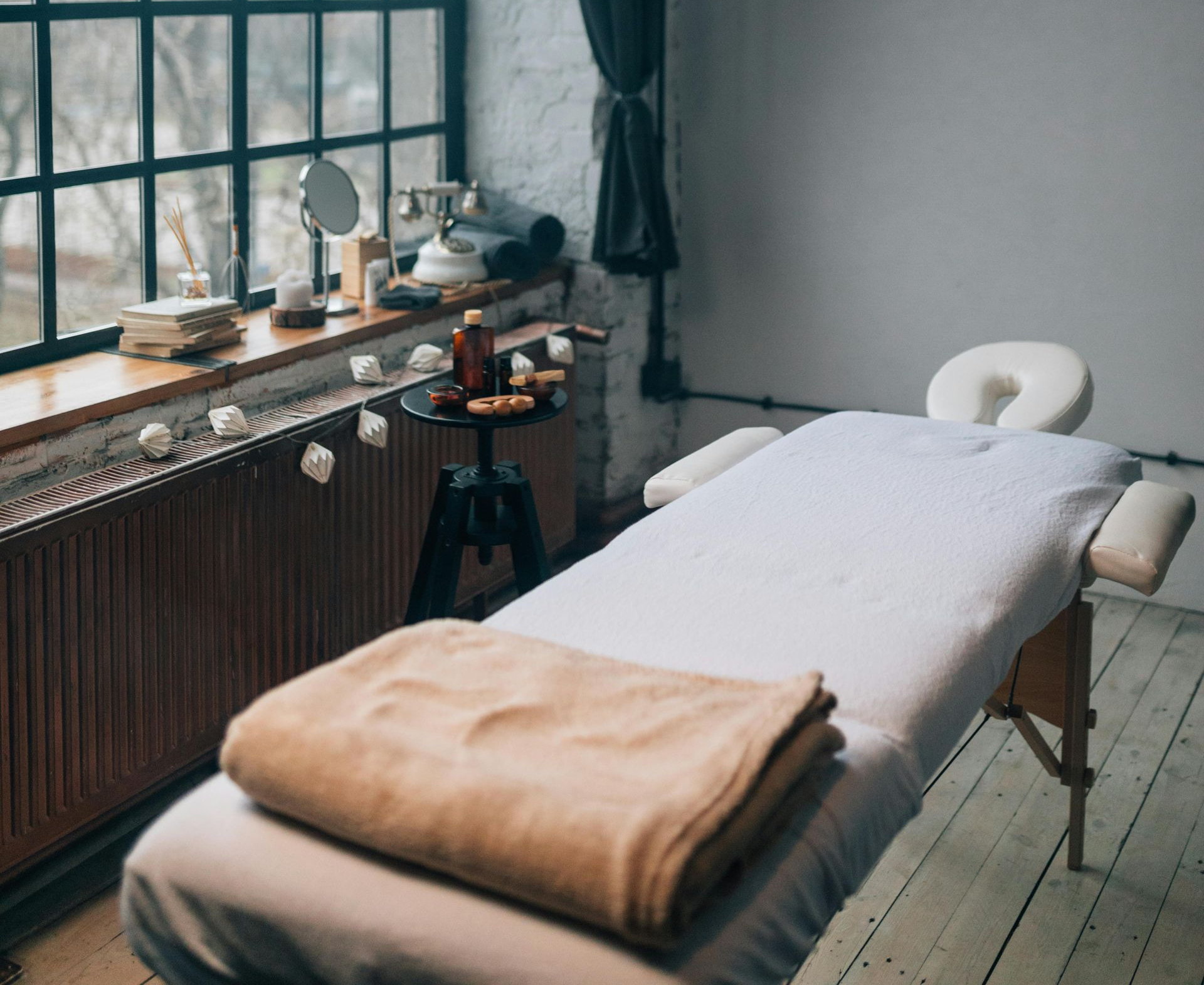
You lie on a massage table, face up. Sessions work with the full body from head to feet and generally stay on the back — you won’t be asked to flip over. The practitioner uses hands-on or energetic touch depending on what’s being asked for and what you’re comfortable with. For clients who prefer minimal or no physical contact — including trauma survivors for whom touch can be activating — sessions can work primarily with energetic presence and guided awareness.
Throughout the session, your practitioner will:
- Check in on consent continuously, asking if touch is still okay, or if switching to energetic is what's needed for safety and comfort. Consent an ongoing conversation, with you being in complete control of what your soma needs.
- Invite your active participation. You might be asked to meet the touch with your own awareness, engage in breath patterns, incorporate sound or vocalizations as you feel comfortable, and introduce movement for creating more aliveness and release.
- Pause with you when something arises. We'll pause to check in on what's changed, what's here, what's noticed, if anything, to increase somatic awareness and collaboration in this practice.
You may notice warmth, spontaneous breath changes, emotion, or a deep sense of settling. You may also experience somatic releases — laughter, tears, trembling, sighing, sounds — as the nervous system reorganizes. None of this is alarming. All of it is your body doing what it knows how to do when it finally feels safe enough to let go.
After the session
You’ll close with a brief debrief — how did that land, what did you notice, what are you taking with you. Integration doesn’t happen only on the table.
Who Somatic Bodywork Is For
Somatic bodywork is a strong fit for people navigating:
- Burnout or chronic stress
- Life transitions, including, but not limited to, career, relationships, identity, loss
- Grief, or grief that never quite got space to be grief
- Trauma healing, anxiety, depression, c-ptsd and other conditions (that are not urgently present, or in crisis phase)
- The particular stuck feeling that comes from having done a lot of personal work and still hitting a wall in the body
It also works well for people who are not in crisis — high-functioning people who simply want to stop white-knuckling their lives and start actually inhabiting them. You don’t need a diagnosis.
Ready to Experience It?
Book a somatic bodywork session at WildRise at one of our healing environments.
Want to go deeper first? Download our free guide at wildrisecollective.com/ebook-somatic-bodywork for more.
Frequently Asked Questions (FAQ)
Is somatic bodywork the same as massage?
No. Massage works primarily with muscle tissue, circulation, and physical tension. Somatic bodywork works with the nervous system through attuned touch or energetic contact, breathwork, movement, and sound, with the goal of shifting patterns held in the body rather than addressing muscle tissue directly.
Do I have to undress?
No. Sessions at WildRise are fully clothed throughout, always.
What should I wear?
Comfortable, loose clothing you can relax in. Think yoga pants, leggings, a soft t-shirt or sweatshirt — anything you'd wear to rest in. You'll be lying down for most of the session, so avoid anything stiff, restrictive, or with a lot of hardware like belts or structured waistbands. Leave the nice jeans at home.
What if I’m not comfortable with touch?
Touch is an option, not a requirement. Sessions can be adapted to work with energetic presence, guided breath, and movement for clients who prefer minimal or no physical contact. Consent is revisited throughout.
Can somatic bodywork help with anxiety?
Many people find it supports anxiety regulation, particularly anxiety held in the body as physical bracing, shallow breath, or chronic tension. It works well alongside clinical treatment for anxiety rather than as a
Is somatic bodywork evidence-based?
Body-based approaches to trauma and nervous system regulation have a growing research base, supported by studies across trauma, stress physiology, and integrative health. Somatic bodywork as a specific modality continues to build its formal evidence base. The Strozzi lineage emphasizes rigorous training: in-person immersion, supervised client hours, and the practitioner’s own sustained embodied practice as the foundation of the work. A weekend certification is not how this training is done.
Do I need a therapist referral?
WildRise welcomes clients with and without a therapist referral. If you’re currently in therapy, we encourage that collaboration and are happy to coordinate with your provider when appropriate.
How many sessions does it take?
While many of our clients opt for bi-weekly or monthly bodywork, even a single session can offer meaningful relief and a clear felt sense of what’s possible. We suggest starting with a minimum of three sessions.
How is somatic bodywork different from somatic integration coaching?
Both work with the nervous system and embodied patterns. Somatic bodywork keeps hands-on work as the primary focus throughout. Somatic coaching is conversational and practice-based, building skills you carry into daily life. In the Strozzi lineage, bodywork can be woven into a coaching session when it’s what’s needed — it’s one tool among several rather than the organizing focus.