

How Somatic Work Actually Changes Your Nervous System
How does Somatic work change the nervous system?

Why Talk Therapy and Thinking Your Way Out of It Isn't Always Enough
You've probably tried to think your way out of anxiety. Maybe you've journaled about your triggers, talked through your childhood patterns, or given yourself very reasonable explanations for why you shouldn't feel the way you feel.
And yet your body still tenses when your phone rings. Your chest still tightens in certain conversations. You still hold your breath without realizing it, or find yourself exhausted for no clear reason.
What I've learned: understanding why you react a certain way is valuable. But understanding alone doesn't change the reaction. Your nervous system needs something different than insight.
What's Actually Happening in Your Nervous System
Your nervous system has two main operating modes, plus a third state most people don't know about:
- Sympathetic activation is your gas pedal. Heart rate up, breathing shallow, muscles ready. This is useful when you need to move fast or handle a deadline. It becomes a problem when it's your default setting.
- Parasympathetic activation is your brake pedal. Heart rate slows, breathing deepens, digestion works. This is rest, repair, and connection. Most stressed people have forgotten how to access this state reliably.
- Dorsal vagal shutdown is what happens when your system decides fighting or running won't work. You freeze. You dissociate. You go numb. This is an ancient survival response, and it's more common than people realize.
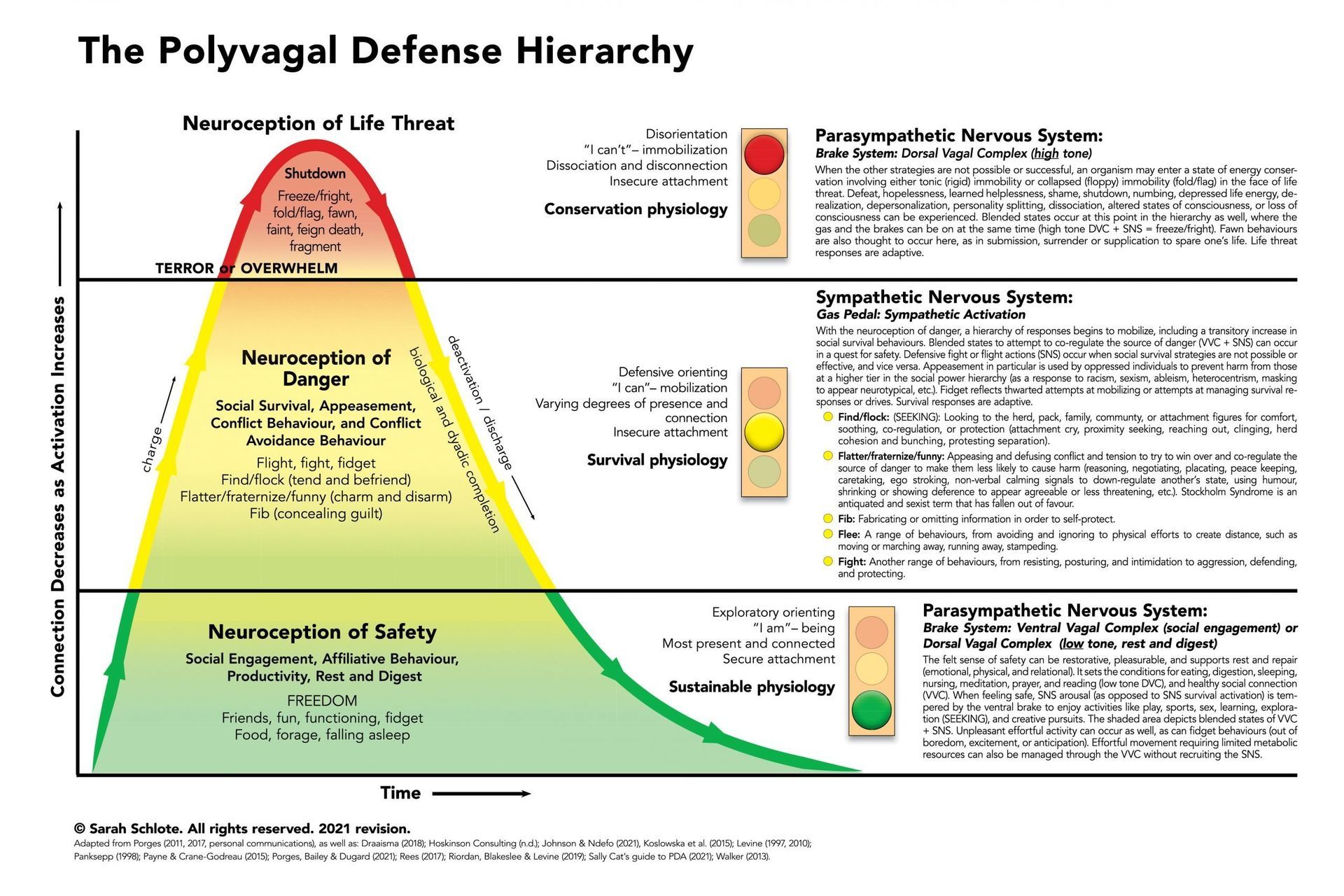
Here's the thing: these states get carved into your body through experience. Trauma, chronic stress, unpredictability, and lack of safety all teach your nervous system to favor certain patterns. A childhood where you had to stay hypervigilant creates an adult nervous system that treats calm as dangerous. Years of pushing through exhaustion teach your body that rest isn't allowed.
These patterns live in your tissues, not just your thoughts. Your muscles hold tension from years of bracing. Your breath stays shallow from decades of holding back. Your digestion struggles because your body never feels safe enough to fully rest.
This is why you can understand your anxiety intellectually and still feel it in your chest every morning.
Why Somatic Work Is Different
Talk therapy works top-down. It engages your prefrontal cortex, the part of your brain that thinks, analyzes, and makes meaning. This is valuable work. It helps you understand your patterns, reframe your stories, and develop insight.
Somatic work goes bottom-up. It engages your body first, which accesses the parts of your nervous system that operate below conscious thought. Your brainstem and limbic system don't speak in words. They speak in sensation, rhythm, and safety signals.
When you work somatically, you're communicating directly with the parts of your nervous system that created the pattern in the first place. You're not trying to convince your body to relax. You're giving it the actual experience of safety, regulation, and choice.
This matters because your brain is neuroplastic. It changes based on experience, not just understanding. Every time you practice a new pattern in your body, you're building new neural pathways. Every time you choose a regulated response instead of a reactive one, you're strengthening that capacity.
Think of it like learning to play an instrument. You can read all the music theory books in the world, but your fingers won't know what to do until you actually practice. Somatic work is the practice that teaches your nervous system new songs.
What Somatic Work Actually Looks Like
Somatic work isn't one single thing. It includes practices like breathwork, somatic experiencing, body-based therapy, nervous system regulation techniques, and trauma-informed bodywork. What these approaches share: they all work directly with sensation, movement, breath, and the body's innate capacity to heal and regulate.
In a session, you might learn to track sensations in your body without immediately trying to fix or change them. You might practice orienting to your environment to help your nervous system recognize safety. You might explore gentle movement that releases held tension. You might work with your breath to shift between nervous system states intentionally.
The goal isn't to eliminate stress or discomfort. The goal is to increase your capacity to feel what's happening in your body, regulate your responses, and make choices instead of defaulting to old patterns.
This often feels subtle at first. You notice you're breathing deeper. You catch yourself clenching your jaw and can actually release it. You feel the early signs of overwhelm and know how to tend to them before you crash.
What Actually Changes
When you work somatically over time, real changes happen in your nervous system. Not just feeling better in the moment, but measurable shifts in how your body operates.
- Your interoception improves. This is your ability to feel what's happening inside your body. Most people have learned to ignore or override these signals. Somatic work rebuilds this crucial awareness. You start recognizing hunger, fatigue, tension, and activation as they arise, not hours later when you're already depleted.
- Your window of tolerance expands. This is the range of activation you can handle while staying regulated. Trauma and chronic stress narrow this window. You swing quickly from calm to overwhelmed, or you stay numb to avoid feeling anything. Somatic work gradually widens the window. You can handle more challenge without losing your center, and you can feel more deeply without collapsing.
- Your capacity to self-regulate increases. Instead of needing external fixes to calm down or perk up, you develop internal tools. You know how to ground yourself when anxious. You know how to mobilize when shut down. Your body becomes a resource, not a problem.
- Physical markers change. Heart rate variability improves, which is a key indicator of nervous system flexibility. Cortisol patterns normalize. Inflammation decreases. Sleep deepens. Digestion works better. These aren't just nice side effects. They're evidence that your nervous system is actually changing.
- Emotional capacity shifts. You can be with difficult feelings without either drowning in them or pushing them away. You notice more nuance in your emotional experience. You recover from stress faster. You're less reactive in relationships because your body isn't constantly braced for threat.

What to Expect When You Start
Somatic work takes time. Your nervous system didn't develop its patterns overnight, and it won't release them overnight either.
Early on, you might feel more, not less. As your awareness increases, you notice sensations and emotions you've been pushing down for years. This can feel uncomfortable, but it's actually a sign the work is happening. You're thawing, not breaking.
The work also feels different than talk therapy. You'll spend time in silence, tracking sensations. You might move slowly or shake or yawn or cry without always knowing why. Your practitioner might ask "where do you feel that in your body?" instead of "what are you thinking about?"
This is supposed to feel strange at first. Your body is learning a new language.
You'll know it's working when you start catching yourself mid-pattern. You notice you're holding your breath and choose to exhale. You feel anxiety rising and can ground yourself instead of spiraling. You recognize when you're pushing too hard and actually let yourself rest.
These moments of choice are the evidence. Your nervous system is developing new options.
Why Working With a Skilled Practitioner Matters
You can learn somatic practices on your own, and many people benefit from self-guided work. But there are reasons to work with someone trained in this approach.
A skilled practitioner can track what's happening in your nervous system, often before you're aware of it. They can help you titrate the work so you're building capacity without overwhelming your system. They can hold space for what needs to emerge without rushing the process.
Somatic work also involves working with material that's been held in the body precisely because it wasn't safe to feel it before. A practitioner creates the relational safety that allows your nervous system to actually release what it's been carrying.
This isn't about dependency. It's about having support while you rebuild the foundation of how your body operates in the world.
The Body Knows How to Heal
Here's what I trust after extensive training and experiencing of this work: your body already knows how to regulate, rest, and heal. These aren't skills you need to learn from scratch. They're capacities you were born with that got interrupted by trauma, stress, or lack of safe connection.
Somatic work isn't about fixing a broken nervous system. It's about removing the obstacles so your system can do what it's designed to do.
Your body has been trying to tell you something for a long time. Somatic work is how you learn to listen, and more importantly, how you learn to respond.
Ready to explore somatic work for your own nervous system?
Download my free guide: Understanding Your Nervous System, or
book a session to begin the work of coming home to your body.